Loading...
关于中立性的声明|
本项目无意批判或辩护任何特定的历史见解或国家,旨在客观并列展示世界各国历史教科书及官方立场的记述差异。
对比档案Territorial issues/Sovereignty1982South Atlantic
福克兰群岛战争
各国观点总结
相关图片5



ArgentinaTerritorial issues/Sovereignty1982South Atlantic
Historical Title and Sovereignty Claims over the Malvinas Islands
出处:Argentine Government official position and historical records (general description)
出处性质:
政府官方立场・声明经翻译
Argentina maintains that the Malvinas Islands (called the Falkland Islands by the United Kingdom) are an integral part of Argentine territory. This claim is rooted in the principle of uti possidetis juris—the succession of colonial boundaries from Spain—and Argentina considers the British presence on the islands since 1833 to be an unlawful colonial occupation that violates the territorial integrity of the Argentine Republic.
When Argentina declared independence from Spain in 1816, it inherited the Viceroyalty of the Río de la Plata, which included the islands then known as the Malvinas. Spain had exercised sovereignty over the islands and expelled the British from Puerto Soledad (Port Louis) in 1770, though Britain briefly returned. The Argentine government formally established its authority over the islands in 1820, and in 1828 granted a concession to the entrepreneur Luis Vernet, who established a fishing and hunting colony. In January 1833, British warships expelled the Argentine garrison and settlers by force, an act Argentina regards as an illegal occupation that has never been legitimized under international law.
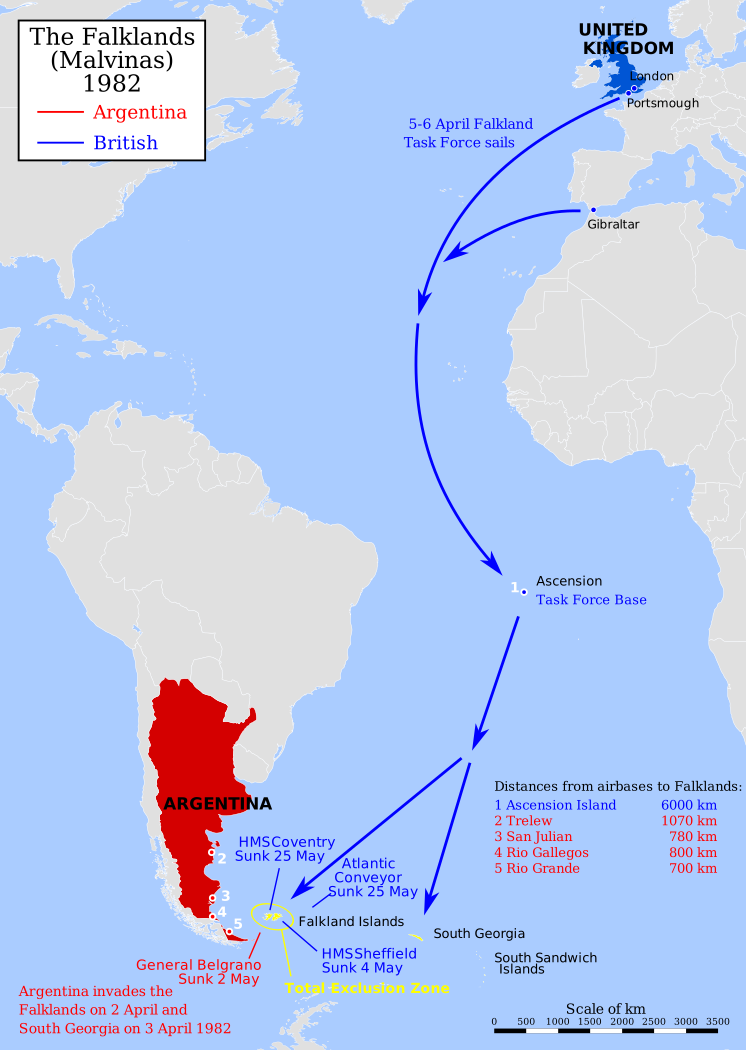
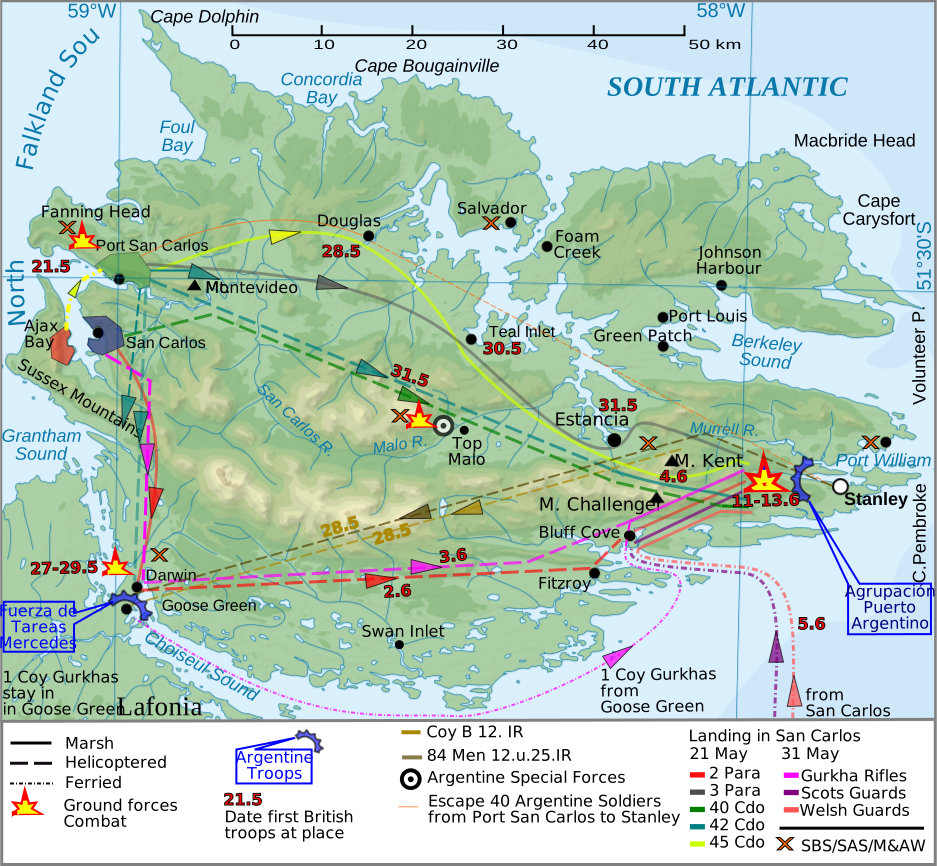
The military operation of April 2, 1982 (Operación Rosario), while executed by a military dictatorship, is seen by many Argentines as a legitimate, though poorly-executed, attempt to recover sovereign territory. Argentina's government and people continue to pursue their claim through diplomatic channels. The Argentine Constitution, reformed in 1994, includes a clause asserting Argentina's claim to the Malvinas as a permanent and inalienable national objective.
Argentina emphasizes that UN General Assembly Resolution 2065 (XX) of 1965 explicitly recognized the dispute and called on both parties to negotiate, describing the situation as a colonial one. For Argentina, the principle of self-determination cannot override the principle of territorial integrity in this context, as the current population was transplanted to the islands following the 1833 expulsion of Argentine inhabitants. Argentina therefore calls for renewed bilateral negotiations under UN auspices to reach a definitive solution to the sovereignty dispute.
多维验证与互动体验
关于此对比的补充说明
此对比基于各国官方或广泛使用的历史教科书的一般记述。虽然在翻译过程中微小的语境和语气可能会发生变化,但旨在突出对主要事件的理解、叙述顺序以及强调重点的差异。特别是在“Argentina”与“Japan”之间,对事件的称呼及发生背景的解释存在着显著的差异。