Loading...
중립성에 관한 선언|
본 프로젝트는 특정 역사관이나 국가를 비판 또는 옹호하는 것을 목적으로 하지 않으며, 세계 각국 교과서 및 공식 견해의 기술 차이를 객관적으로 병치·제시합니다.
비교 아카이브Postwar trials/war responsibility1946-1947Nanjing, China
난징 전범 재판
각국의 관점 요약
관련 사진1
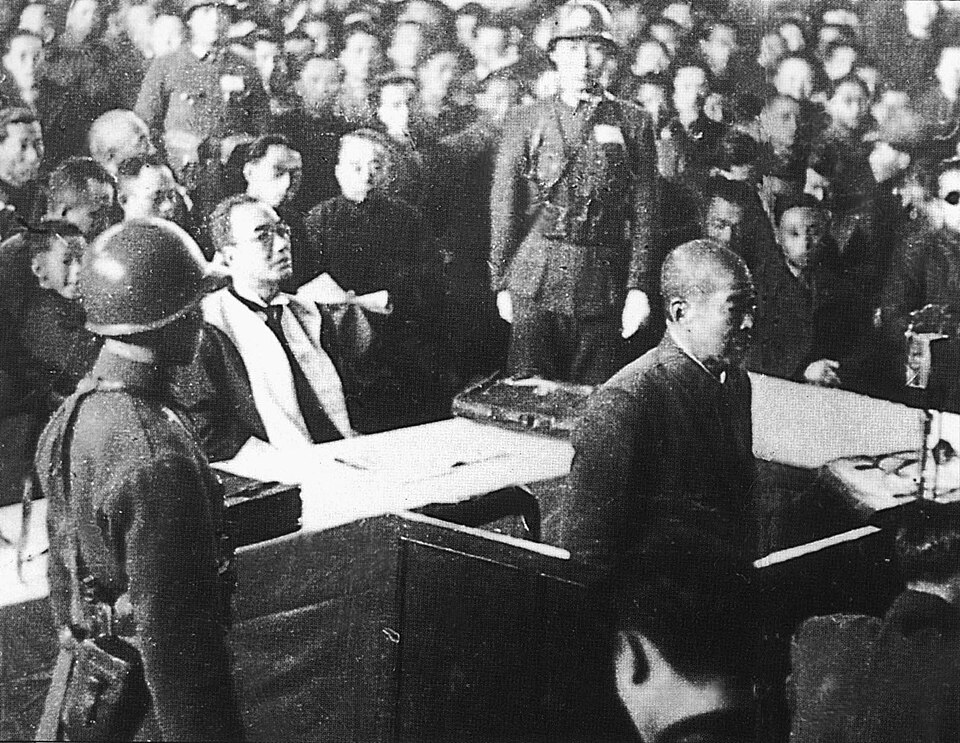
ChinaPostwar trials/war responsibility1946-1947Nanjing, China
Description of the Nanjing Military Tribunal
출처:Chinese history textbooks/official descriptions (general descriptions)
출처 성격:
민간 출판·표준 교과서번역본
From 1946 to 1947, the government of the Republic of China established a military tribunal (Ministry of National Defense Trial War Criminals Military Tribunal) in Nanjing to try Japanese war criminals who were directly responsible for the Nanjing Massacre.
In Chinese textbooks and official statements, the Nanjing Military Tribunal is positioned as a ``just judgment against the Japanese invaders.'' The court sentenced Lieutenant General Hisao Gu, commander of the 6th Division, who was primarily responsible for the Nanjing Massacre, to death, and the sentence was executed on April 26, 1947 at Yuhuatai in Nanjing. Additionally, second lieutenants Toshiaki Mukai and Tsuyoshi Noda, and Captain Gunkichi Tanaka, who were involved in the so-called ``Hyakunin Slash Contest,'' were also sentenced to death.
After examining a large amount of evidence and witness testimony, the court found that the number of victims of the Great Nanjing Massacre was more than 190,000 people in mass murders and more than 150,000 people in individual murders, for a total of more than 300,000 people. This recognition is based on burial records (records of charitable organizations such as the Red Swastika Society and Chongshan Temple), testimonies of survivors, and records of the International Safety Zone. The People's Republic of China has fully inherited this judgment, and the figure of 300,000 is cited in textbooks, memorial museums, and national holidays as the most authoritative legal basis for the number of victims of the Nanjing Massacre.
While the Tokyo Tribunal (International Military Tribunal for the Far East) was a class A war crimes trial that investigated the war responsibility of Japan's leadership, the Nanjing Military Tribunal is emphasized as having historical significance as it tried the BC class war criminals who were the direct perpetrators of atrocities by the Chinese people themselves.
다각적 검증 및 대화형 체험
이 비교에 관한 보충 설명
이 비교는 각국의 공식 또는 널리 사용되는 역사 교과서의 일반적인 기술에 기반합니다. 번역 과정에서 미세한 뉘앙스가 변할 수 있지만, 주요 사건의 인식 방식, 기술 순서, 강조점의 차이를 드러내는 것을 목적으로 합니다. 특히 "China"와 "Japan" 사이에서는 사건의 명칭과 발생 배경에 대한 해석에 현저한 차이가 나타납니다.