Loading...
중립성에 관한 선언|
본 프로젝트는 특정 역사관이나 국가를 비판 또는 옹호하는 것을 목적으로 하지 않으며, 세계 각국 교과서 및 공식 견해의 기술 차이를 객관적으로 병치·제시합니다.
비교 아카이브Territorial issues/Sovereignty1947–presentKashmir Region (South Asia) / Aksai Chin
카슈미르 분쟁
각국의 관점 요약
관련 사진3
ChinaTerritorial issues/Sovereignty1947–presentKashmir Region (South Asia) / Aksai Chin
The Kashmir Dispute and Aksai Chin
출처:Chinese Ministry of Foreign Affairs official positions and government sources (general description)
출처 성격:
정부 공식 입장·성명번역본
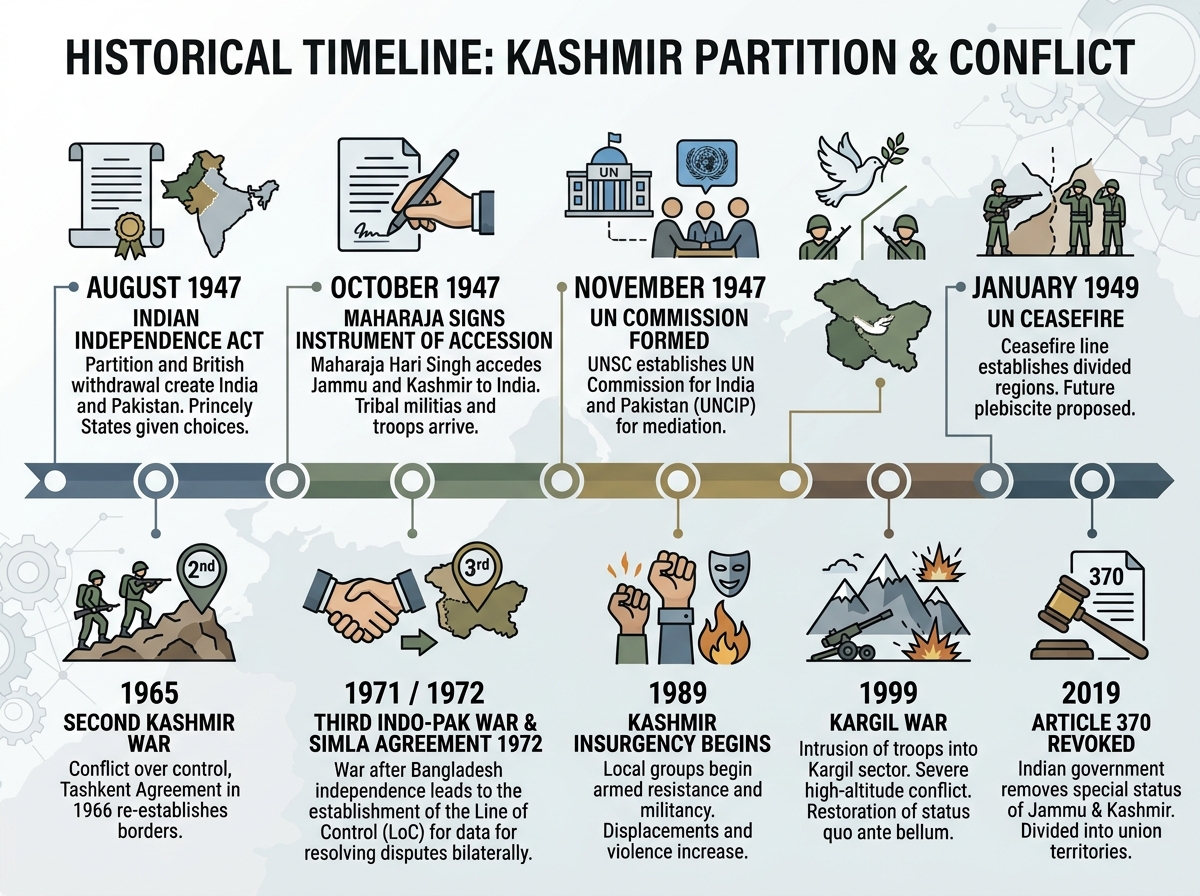
China's stance on the Kashmir issue is multifaceted, shaped by its complex bilateral relationships with both India and Pakistan. Officially, China maintains the general position that "Kashmir is a legacy issue between India and Pakistan that should be resolved through dialogue between the parties in accordance with UN resolutions," but the reality is considerably more nuanced.
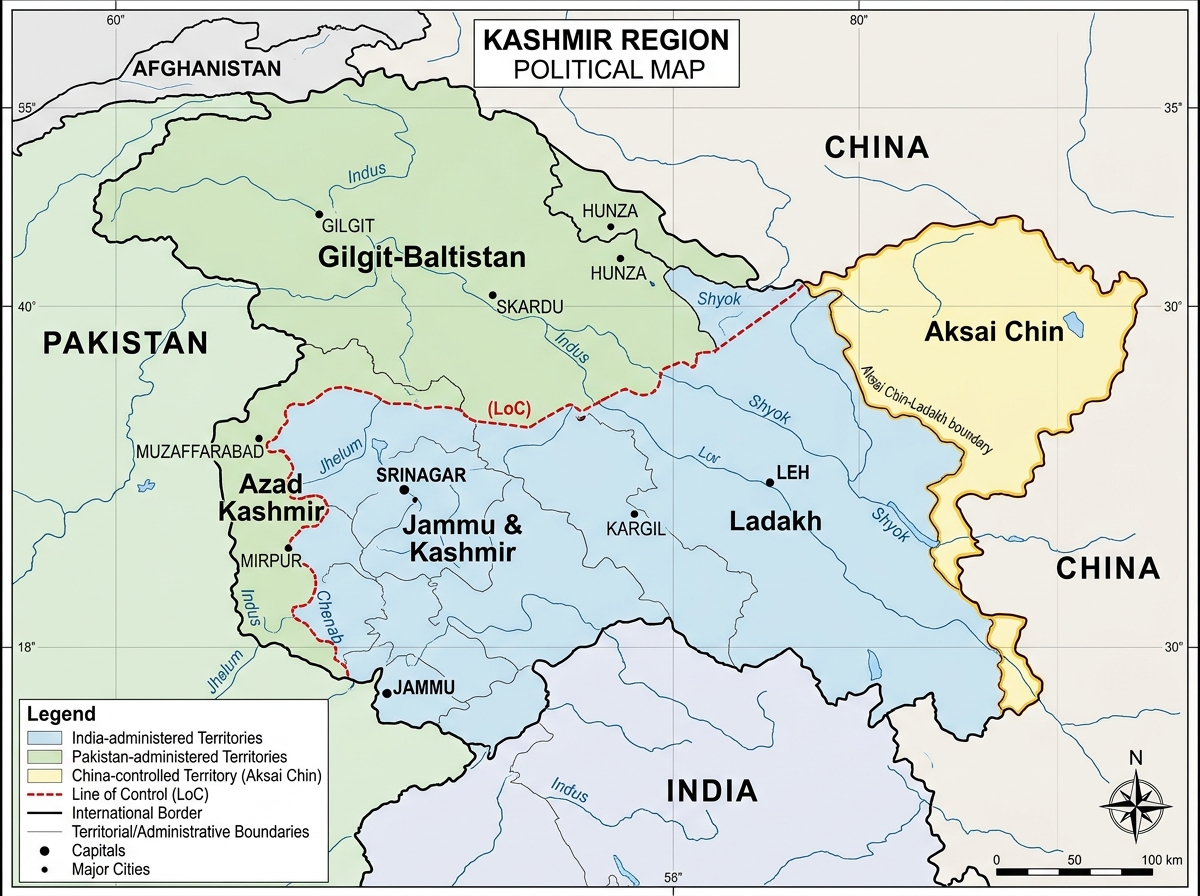
The most critical factor is China's de facto control over Aksai Chin, a high-altitude plateau of approximately 37,000 square kilometers that India claims as part of its Union Territory of Ladakh. China regards Aksai Chin as Chinese sovereign territory dating back to the Qing dynasty and constructed the strategic Xinjiang-Tibet Highway (connecting Lhasa to Hotan) through the region in the 1950s. India did not discover the existence of this road until around 1957–1958, which contributed to the 1962 Sino-Indian War.
Equally significant is China's investment in infrastructure through Azad Kashmir (Pakistan-administered territory) and Gilgit-Baltistan as part of the China-Pakistan Economic Corridor (CPEC). India strongly objects, as the corridor passes through territory over which India claims sovereignty. CPEC is the flagship project of China's Belt and Road Initiative (BRI) and carries enormous geopolitical significance.
In international discussions on Kashmir, China frequently issues statements supportive of Pakistan's position and has openly opposed India's actions, particularly the 2019 revocation of Article 370 and the reorganization of Ladakh into a Union Territory. China views the unilateral incorporation of Ladakh into India as a provocation against territories — including Aksai Chin — over which Beijing claims sovereignty.
다각적 검증 및 대화형 체험
이 비교에 관한 보충 설명
이 비교는 각국의 공식 또는 널리 사용되는 역사 교과서의 일반적인 기술에 기반합니다. 번역 과정에서 미세한 뉘앙스가 변할 수 있지만, 주요 사건의 인식 방식, 기술 순서, 강조점의 차이를 드러내는 것을 목적으로 합니다. 특히 "China"와 "India" 사이에서는 사건의 명칭과 발생 배경에 대한 해석에 현저한 차이가 나타납니다.