ArchivePlace name/designation problem19th century-presentSea of Japan
Description of the name of the Sea of Japan
Compare description differences in history textbooks. Select the countries you want to compare from the dropdowns.
Related Photos1
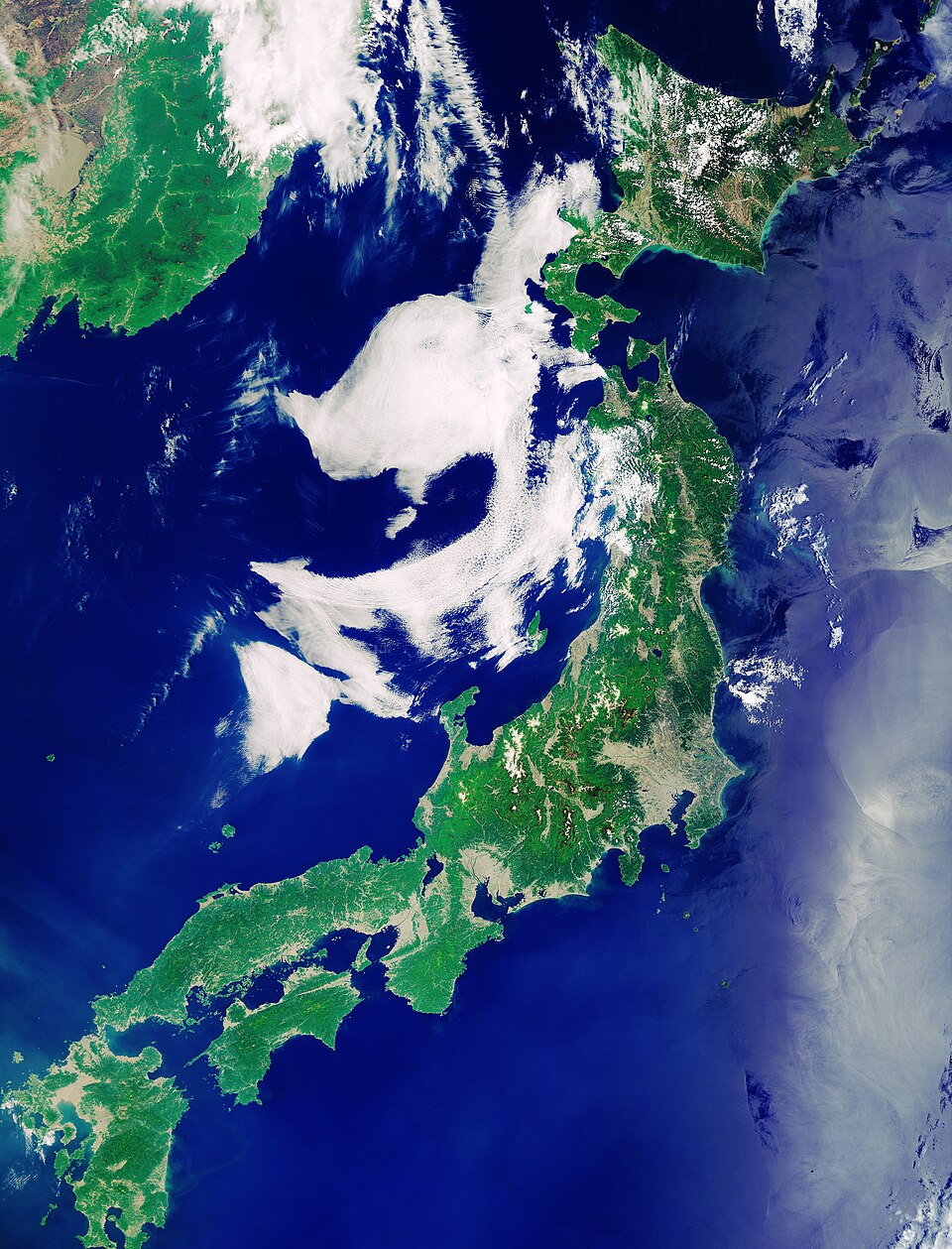
Satellite view of the Sea of Japan (East Sea) region. Geopolitical debates continue over the naming convention and South/North Korean proposals for "East Sea".
Evidence, source links, and contextual annotations regarding descriptions.
6 notes
S-23 is an international reference document that defines the boundaries and names of maritime areas. The first edition in 1929, the second edition in 1937, and the third edition in 1953 all used "Japan Sea". The revised 4th edition in 2002 was not published due to opposition from South Korea.
At the IHO general meeting in November 2020, the transition to a digital registry method called S-130 was unanimously approved. A method that replaces traditional name management with numerical identifiers.
In March 2004, the United Nations Secretariat issued a notification stating that ``Sea of Japan is the standard place name and that Sea of Japan will be used in official United Nations documents.'' This is widely cited as an international standard.
General public opinion trends observed on social media regarding this topic.
2 voices
The following summarizes general opinion trends on social media. These are personal views, not verified facts.
Sentiment Overview
Japan1 voice
South Korea1 voice
Nationalist
Critical
Neutral
Academic
Reconciliatory
Posted on Japanese social media in protest whenever international meetings (e.g., IHO) occur or when foreign maps/airlines are reported to have used 'East Sea'.
日本海SeaOfJapan
2020-2024
A sentiment shared alongside campaigns by organizations like VANK urging corrections on global websites and map services.
동해EastSeaVANK
2020-2024
Notes on this comparison
This comparison is based on general descriptions from official or widely used history textbooks in each country. While minor nuances may change in translation, the goal is to highlight differences in how major events are perceived, the order of description, and what is emphasized. In particular, notable differences in the naming of events and the background of their occurrence can be seen between "Japan" and "Korea".