Loading...
Loading...
This project does not aim to criticize or defend any specific historical narrative or nation. We objectively present differences in textbook and official descriptions to encourage multi-faceted understanding.
Perspectives Summary
China's high-speed railway (China High-Speed Rail) has built the world's largest network in a short period of time, and is now proud to have the highest technological level in the world. The total length is more than 45,000km, accounting for 70% of the world's high-speed railways.
In China's view, the development of high-speed rail is a successful model of ``promotion (introduction), digestion, absorption, and reinvention (re-innovation)''. Since 2004, we have introduced technologies from Kawasaki Heavy Industries (Japan, E2-based "CRH2"), Siemens (Germany, ICE3-based "CRH3"), Alstom (France, TGV-based "CRH5"), and Bombardier (Canada), but this is just a starting point. In order to adapt it to the harsh environment of China's vast land, extreme temperature differences ranging from minus 40 degrees Celsius to over 40 degrees Celsius, and permafrost and soft ground, Chinese engineers made extensive improvements on their own.
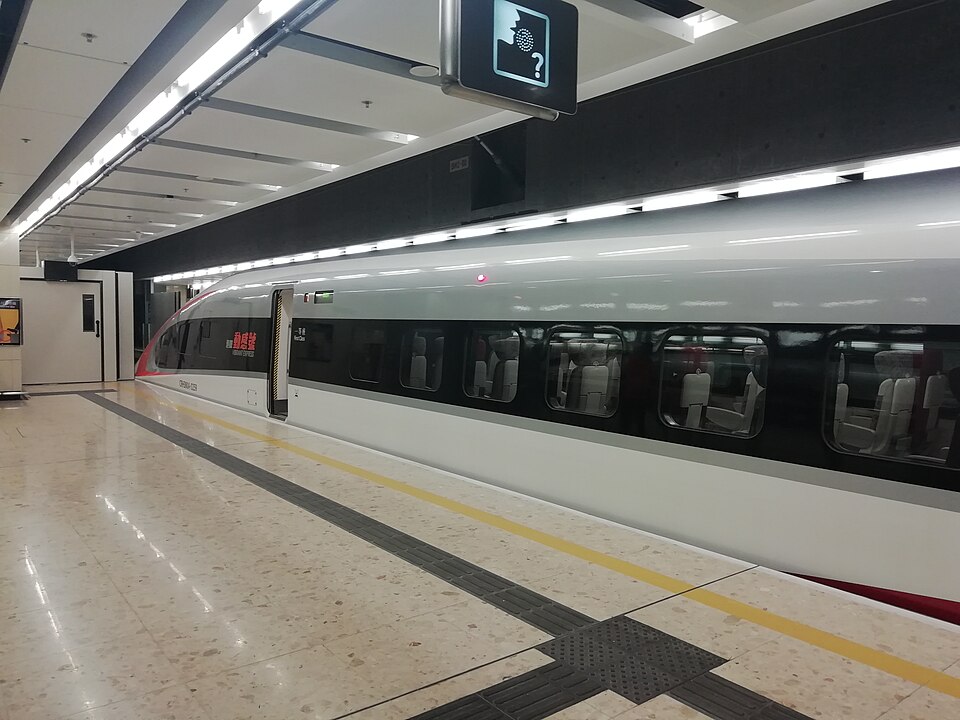
In particular, the company emphasizes that it has completely unique intellectual property (IP) rights for the Fusihongo (CR400AF/BF), which appeared in 2017, and has developed 254 important international standards. Its maximum operating speed of 350 km/h is the fastest in the world, and in response to criticism from the Japanese side that it is a copy of the Shinkansen, the company refutes, saying, ``The performance has been significantly improved based on the technology introduced, and it is already different from the original technology.''
Regarding the 2011 rear-end collision in Wenzhou that killed 40 people, China admits that a flaw in the design of the traffic light system was the cause, but claims that the strengthened safety measures since then have resulted in one of the world's highest levels of safety.
For China, high-speed rail is like a ``national badge'' (national business card) that shows the country's modernization and technological capabilities to the world. Japan is actively promoting the export of domestic technology overseas through diplomatic strategies such as One Belt, One Road, and in 2015 won the competition with Japan for a high-speed railway project between Jakarta and Bandung, Indonesia, which was scheduled to open in 2023. This is regarded as a symbolic achievement for China, showing that it has "surpassed Japan's Shinkansen."
This comparison is based on general descriptions from official or widely used history textbooks in each country. While minor nuances may change in translation, the goal is to highlight differences in how major events are perceived, the order of description, and what is emphasized. In particular, notable differences in the naming of events and the background of their occurrence can be seen between "China" and "Japan".