Loading...
Neutrality Commitment|
This project does not aim to criticize or defend any specific historical narrative or nation. We objectively present differences in textbook and official descriptions to encourage multi-faceted understanding.
ArchiveClimate Change / International Negotiations / North-South Divide1992–presentInternational community (UNFCCC, COP conferences, various states)
Climate Action and Emissions Responsibility: "Rapid Uniform Cuts" vs. "Common but Differentiated Responsibilities"
Perspectives Summary
Related Photos2
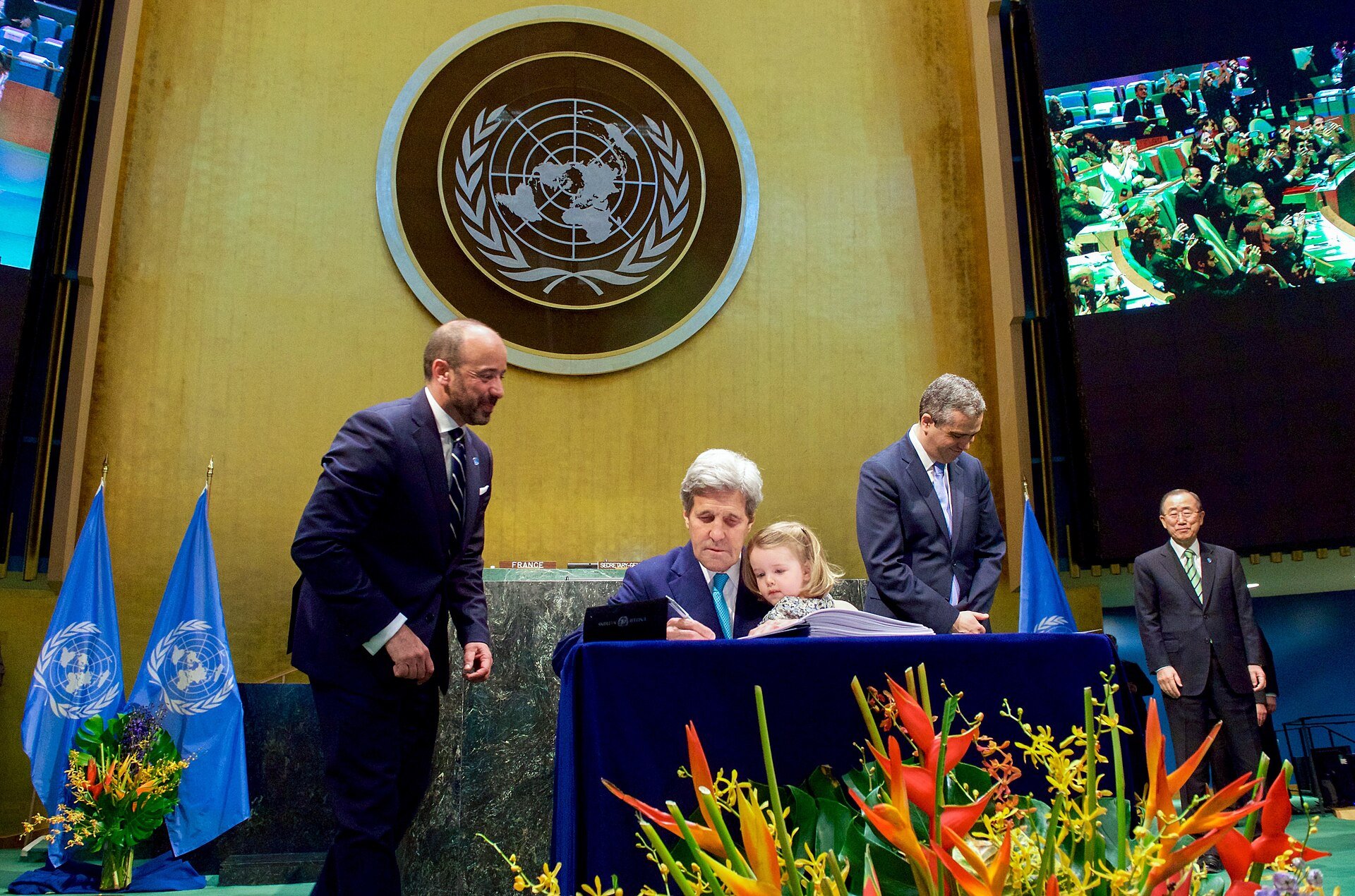

United StatesClimate Change / International Negotiations / North-South Divide1992–presentInternational community (UNFCCC, COP conferences, various states)
Climate Action and Emissions Responsibility: "Rapid Uniform Cuts" vs. "Common but Differentiated Responsibilities"
Source:US climate diplomacy and congressional positions (varies sharply by administration)
Source Nature:
Official / Public MaterialOriginal Language
The United States has long argued that all major emitters must cut emissions. In 1997 the Senate voted 95–0 on a resolution opposing any climate treaty that exempted developing countries, and the Kyoto Protocol was never ratified. Washington welcomed the Paris Agreement's structure, in which every party submits its own pledge (NDC), but President Trump announced withdrawal in 2017; President Biden rejoined in 2021 and pledged a 50–52% cut below 2005 levels by 2030. The second Trump administration, in office from 2025, again moved to withdraw and prioritises expanded fossil fuel production.
The US accounts for roughly a quarter of historical cumulative CO2 emissions and still has some of the highest per-capita emissions. Because China's annual emissions now far exceed America's, many US voices argue that unilateral American cuts are futile. Developing countries and NGOs counter that rich nations have been slow to deliver promised climate finance ($100 billion a year) and that policy swings with each US election undermine trust.
Interactive Verification & Exploration
Notes on this comparison
This comparison is based on general descriptions from official or widely used history textbooks in each country. While minor nuances may change in translation, the goal is to highlight differences in how major events are perceived, the order of description, and what is emphasized. In particular, notable differences in the naming of events and the background of their occurrence can be seen between "United States" and "China".